


How to Design Custom Hang Tags That Elevate Your Packaging

A customer pulls your shirt off the rack. Before they check the fabric, before they read the price, they're holding your hang tag. That small rectangle of cardstock is the first physical conversation between your brand and a potential buyer — and most brands barely think about it.
We've produced hang tags for thousands of clothing brands since 2008, from garage startups ordering 50 tags to established labels running tens of thousands per season. The difference between a tag that gets ripped off and tossed versus one that makes someone pause and pay attention usually comes down to a handful of design decisions. Here's what we've learned.
Why Hang Tags Still Matter in 2026
There's a temptation to think hang tags are outdated — relics of pre-digital retail. But the opposite is true. As more shopping moves online, the unboxing moment has become a brand's best opportunity for a physical impression. A well-designed hang tag transforms a plain poly mailer into something that feels intentional.
Hang tags do three jobs simultaneously. First, they communicate product information: size, price, care instructions, material composition. Second, they reinforce brand identity through color, typography, and texture. Third — and this is the one most people miss — they signal quality. A thick, well-finished tag tells a customer they're holding something worth the price. A flimsy, generic tag does the opposite.
For brands selling at retail, hang tags also serve as silent salespeople. They can highlight your story, your sustainability practices, or your manufacturing standards in a way that rack signage never will.
Choosing Your Cardstock: Basic vs. Deluxe
The single biggest decision in hang tag design is material weight and finish. This choice determines how your tag feels in someone's hand, and that tactile impression happens before they even read a word.
Basic hang tags use standard cardstock — typically 300–350 GSM, which translates to approximately 14–16pt thickness. — with a smooth matte or gloss finish. They're clean, professional, and cost-effective. If you're a newer brand running smaller batches, or if your tags serve a primarily functional purpose (size, price, SKU), basic hang tags get the job done well. Don't mistake "basic" for cheap — these are solid, professional-grade tags. They just skip the premium finishing options.
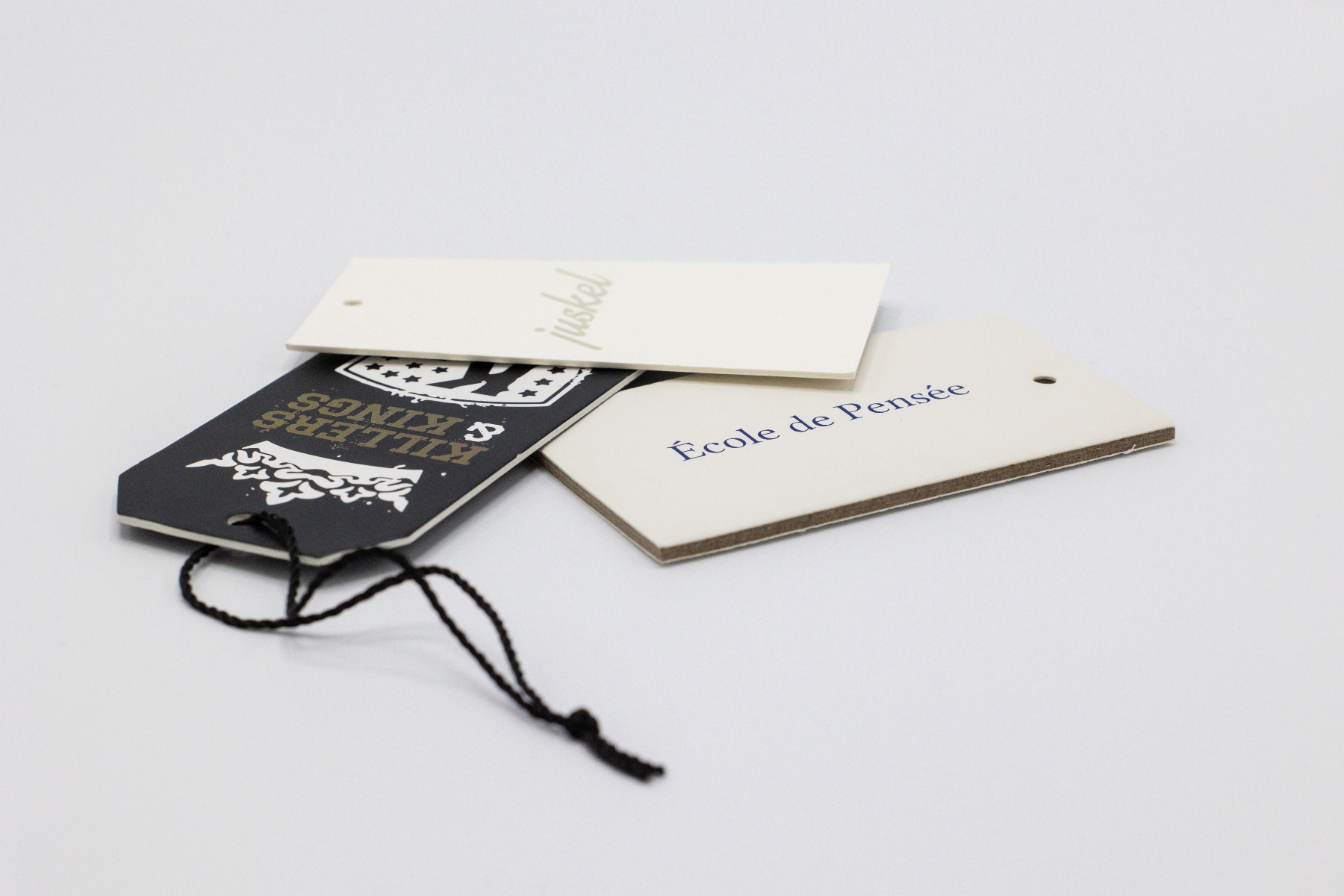
Deluxe hang tags Step into a different league. We’re talking heavier cardstock — often 400+ GSM, translating to approximately 18–24pt thickness, with premium options available up to 48pt cardstock for an ultra-thick, luxury feel plus finishing techniques like gold or silver foil stamping, embossing, debossing, spot UV coating, or soft-touch lamination. A deluxe hang tag with a soft-touch matte finish and a foil-stamped logo creates a sensory experience that screams premium. If you're positioning your brand in the mid-to-high price range, this is where the money is well spent.
A general rule we share with brands: your hang tag should match the quality tier of your product. If you're selling a $120 jacket, a basic kraft tag might undercut the perceived value. If you're selling $18 tees, a foil-stamped deluxe tag might overshoot your margins.
Design Elements That Work
After seeing thousands of hang tag designs come through our production line, certain patterns emerge. The tags that work best — the ones that brands reorder season after season — tend to share a few traits.
Keep it simple. Your hang tag isn't a brochure. The best designs use one or two fonts, a logo, and maybe a single accent color. Resist the urge to fill every millimeter. White space on a hang tag isn't wasted space — it's breathing room that makes your brand name stand out.
Size matters more than you'd think. Standard hang tags run about 2" × 3.5" (business card size) or 2" × 4". But don't default to standard just because it's standard. A square tag, a circular die-cut, or an oversized tag can differentiate your product on a crowded rack. We've seen narrow bookmark-style tags (1.5" × 5") work beautifully for brands going for an editorial, fashion-forward feel.
Don't forget the back. The front of your tag is your brand moment. The back is where you put the practical stuff: care symbols, material composition, country of origin, website URL, a QR code linking to your brand story or styling guide. Some brands use the back for a short origin story — two or three sentences about who they are and what they stand for.
Color consistency is non-negotiable. If your brand uses a specific Pantone color, specify it. CMYK printing can drift between batches, and nothing looks more amateur than hang tags that don't match your labels or packaging. We always recommend providing Pantone references for any brand color that matters.
Strings, Fasteners, and the Small Details
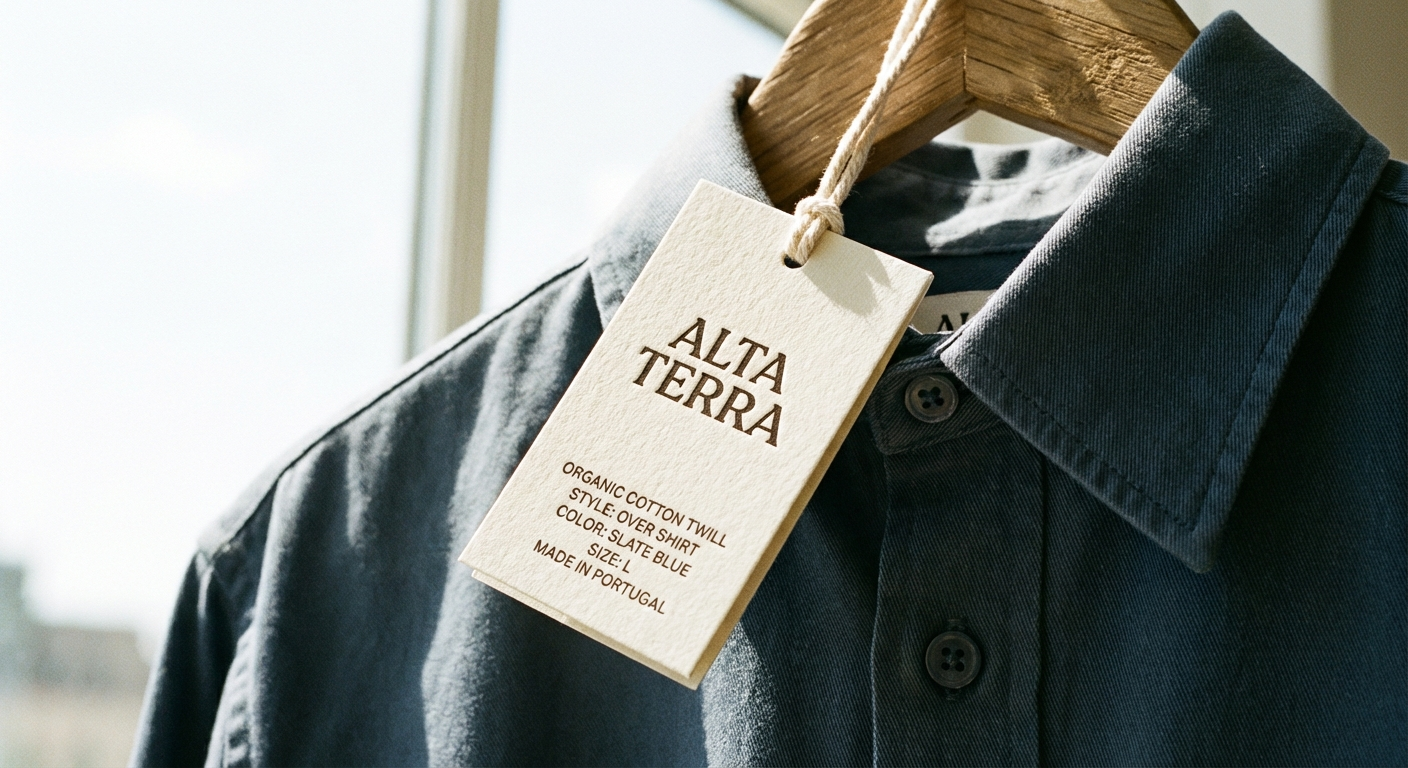
The string or fastener connecting your tag to the garment is part of the design, even if most people treat it as an afterthought. A thick cotton string with a hand-tied knot gives a completely different impression than a thin elastic loop or a plastic swift-tach fastener.
Cotton and hemp strings work well for brands with a natural, artisan, or sustainable positioning. Waxed cord adds a slightly more polished, premium feel. Satin ribbon is popular for lingerie and high-end womenswear. Swift-tach plastic fasteners are the most practical for high-volume retail — they're fast to apply and hold securely — but they don't add any brand value.
We offer hang tag strings separately, which gives you flexibility to mix and match. Some brands order tags and strings separately to experiment with different combinations before committing to a full production run.
Common Mistakes We See
After nearly two decades in this business, we've seen every hang tag mistake in the book. Here are the ones that come up most often:
Text too small. Designers love 6-point type on hang tags. Customers can't read it. If someone needs reading glasses to see your brand name, you've lost the moment. Keep primary text at 10pt minimum, and body text at 8pt absolute minimum.
Ignoring the hole placement. The punch hole needs to work with your design, not fight it. We've had clients send designs where the string hole lands right through their logo because they designed the tag without accounting for it. Always include a 5mm (.25”) clear zone around the punch hole, and position it so the tag hangs straight.
Wrong file format. This one delays production constantly. Hang tag artwork should be submitted as vector files (AI, EPS, or PDF with outlined fonts) at 300 DPI minimum. RGB files will need conversion to CMYK, and the colors will shift. If you send a 72 DPI JPEG pulled from your website, we can work with it, but you won't be happy with the print quality.
Over-designing. Gradients, full-bleed photography, ten different fonts — we've seen it all. The most effective hang tags we produce tend to be the simplest ones. Your tag's job is to make an impression in three seconds. If it takes longer than that to understand what's on it, simplify.
Ordering Tips: Getting the Best Results
Our hang tag minimums start at just 50 pieces, which makes it easy to test a design before committing to a large order. Here's how to make the process smooth:
Start by browsing our full hang tag collection to see what's possible. Look at both basic and deluxe options, and think about which finishing techniques align with your brand positioning.
When you request a quote, include your artwork file (vector preferred), your desired tag dimensions, quantity, cardstock preference, and any special finishes (foil, embossing, spot UV). The more specific you are upfront, the faster we can turn around an accurate quote.
If you're unsure about materials or finishes, ask for samples. We're happy to send swatches of different cardstock weights and finishes so you can feel the difference before you commit. Choosing a cardstock based on how it looks on screen is like choosing a fabric based on a photo — you need to touch it.
For brands ordering both hang tags and woven labels from us, we can ensure color matching across both products. Consistent branding across every touchpoint — labels, tags, packaging — compounds the impression of quality.
The Bottom Line
A great hang tag won't save a bad product, but a bad hang tag can undermine a great one. The good news is that getting it right isn't complicated or expensive — it just requires a bit of intentional design thinking.
Whether you're launching your first product line or refreshing your packaging for a new season, we can help you create hang tags that match the quality of what's inside them. Request a free quote, and we'll walk you through the options that make sense for your brand and your budget. Minimums start at just 50 pieces — enough to test a concept before scaling up.